← All recordings & courses
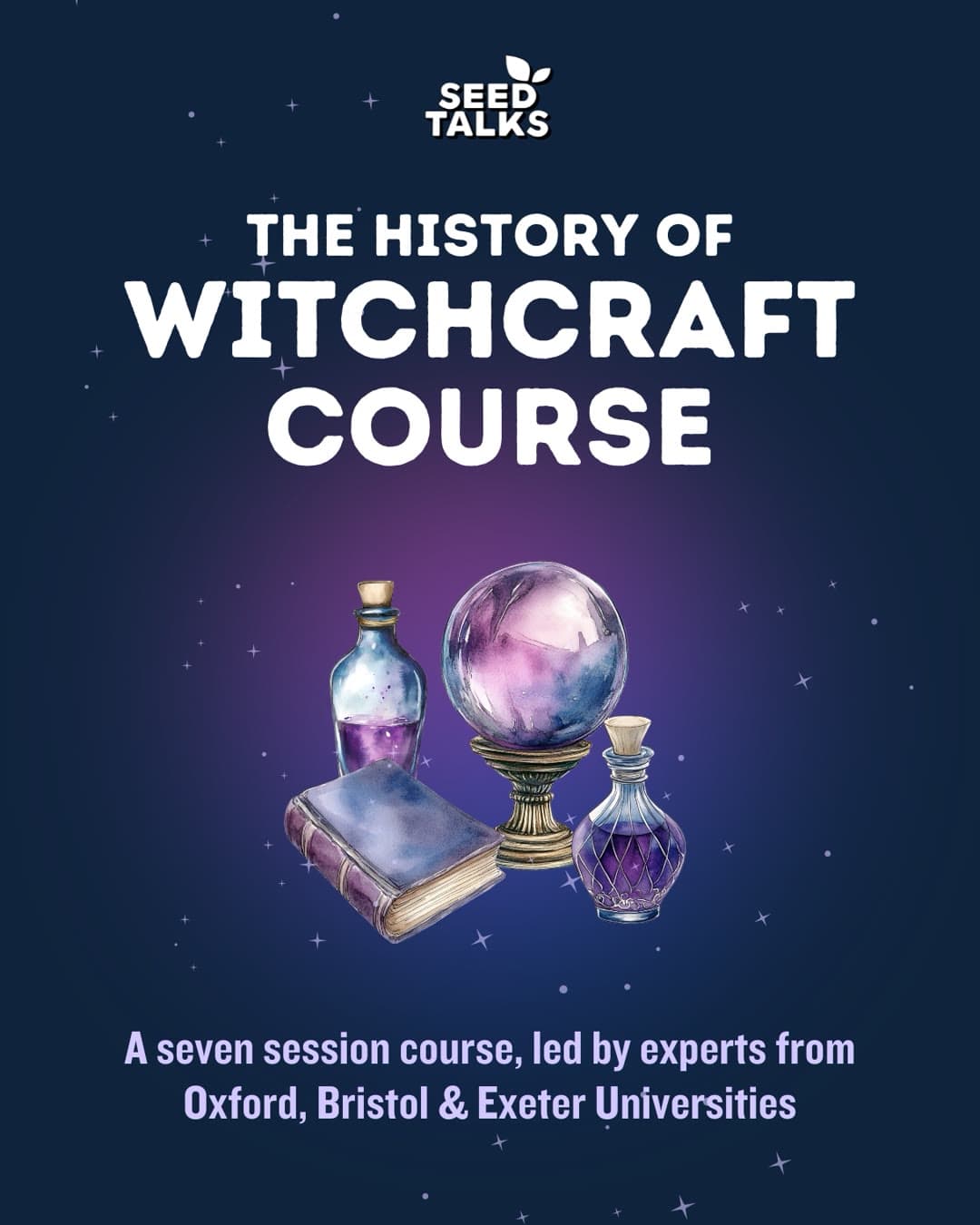
The History of Witchcraft Course
On-demand video course · 7 modules

The History of Witchcraft Course

with 4 leading witchcraft historians

£60

  • ▶ 7 modules
  • 7½ hours of video
  • Instant access
  • Yours until Sep 2027
  • Full refund guarantee

About this course

The stereotype of the witch as an ugly old woman who harms others with supernatural powers still has a strong hold on the popular imagination. But where did it come from — and how did the witch become the healer, the pagan and the feminist icon of today? In this on-demand course, four leading historians from the universities of Oxford, Bristol and Exeter trace the witch from medieval magic to Hollywood. Across seven modules — around seven and a half hours in all — you’ll explore common and learned magic in the Middle Ages, how the crime of witchcraft was invented and gendered, everyday magic and cunning folk in early modern England, the fairy-haunted witch trials of Scotland, the East Anglian witch hunts of the 1640s, the birth of modern pagan witchcraft, and witches on screen from the Land of Oz to Hogwarts, with a workbook for every module.

Everything you get

  • 7 modules from four leading historians — 7½ hours of teaching, in 43 short lessons
  • A downloadable workbook for every module, with further reading
  • A full transcript of every lesson, so you can read along or look back over anything
  • Your own private course hub — every lesson in one place, on any device
  • Instant access by email after checkout — watch and rewatch until September 2027
  • Full refund if it’s not for you — just ask

The course, module by module

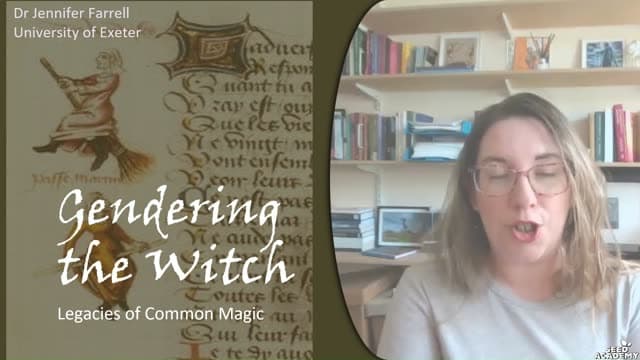
Dr Jennifer Farrell — Gendering of the Witch: Legacies of Common Magic
Module 1

Gendering of the Witch: Legacies of Common Magic

with Dr Jennifer Farrell

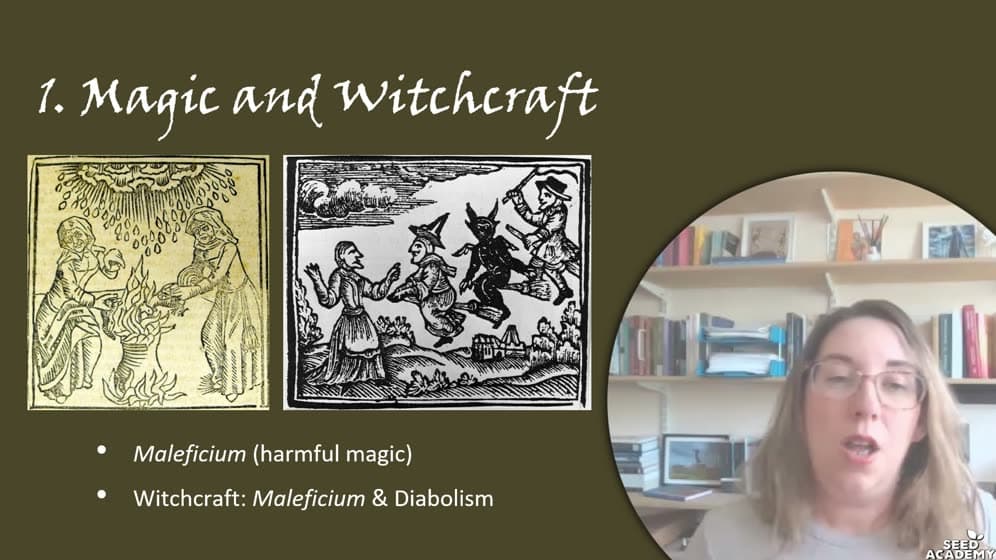
Magic and witchcraft are not the same thing. Jennifer explains how the crime of witchcraft — harmful magic plus devil-worship — only emerged in the 14th and 15th centuries, and how historians think about the far older, everyday “common tradition” of magic. She explores divination, healing charms and love magic (menstrual blood and cockerel spells included), and why, from the Icelandic sagas to Morgan le Fay, magic came to be seen as a woman’s weapon.

  • The difference between magic and witchcraft
  • How historians think about medieval magic
  • Divination, healing and love magic in everyday life
  • Why magic came to be seen as a woman’s weapon
Dr Jennifer Farrell — From Sorcery to Heresy: Making Witchcraft Possible
Module 2

From Sorcery to Heresy: Making Witchcraft Possible

with Dr Jennifer Farrell

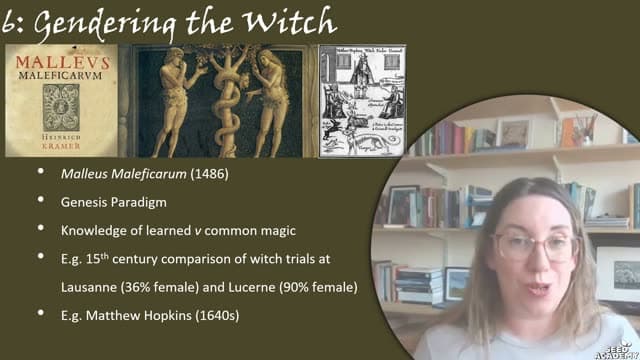
How did the medieval Church go from quiet penance to persecution? Jennifer traces the rise of the Inquisition and the universities, then the all-male “learned” magic of clerics who conjured demons from protective circles — and how it gave the Inquisition its reason to treat magic as heresy. She follows the story through the Knights Templar and the Toulouse inquisition records to the witches’ sabbath, and explains why the Malleus Maleficarum and village accusations made witchcraft a female crime.

  • How the medieval Church moved from penance to persecution
  • Necromancy and the “clerical underworld” of learned magic
  • How heresy trials created the witches’ sabbath
  • Why witchcraft became a crime of women
Dr Tabitha Stanmore — Practising Magic: Everyday Magic in Early Modern England
Module 3

Practising Magic: Everyday Magic in Early Modern England

with Dr Tabitha Stanmore

Step into an English village in 1510, where God, the devil and the fairies are all real. Drawing on her database of around 650 cases, Tabitha shows what people actually used magic for — fortune-telling, healing, catching thieves, love spells and buried treasure (“the early modern version of winning the lottery”) — and who the cunning folk who sold it were. She then explains what the Church and the witchcraft Acts of 1542, 1563 and 1604 really made illegal, and why cunning folk were so rarely punished.

  • Daily life in a world full of the supernatural
  • What magic was used for, and how spells worked
  • Who the cunning folk were, with real case studies
  • What the law actually said about magic
Prof Diane Purkiss — Scottish Witches: Fairy Lovers and Fairy Victims
Module 4

Scottish Witches: Fairy Lovers and Fairy Victims

with Prof Diane Purkiss

In 16th- and 17th-century Scotland, many people believed a beautiful, dangerous fairy otherworld lay alongside their own — and the witch trials, in trying to recast fairies as demons, preserved their stories. Diane reads the ballad of Tam Lin, then tells the extraordinary trial stories of Bessie Dunlop, Alison Pearson, Andrew Man, who claimed to be the fairy queen’s lover, and Isobel Gowdie, asking what fairy belief did for people living with grief, trauma and fear.

  • The Scottish fairy otherworld, and the ballad of Tam Lin
  • The fairy witches of the Scottish trials, in their own words
  • How Scotland’s witch trials worked, and why they were so harsh
  • What fairy belief meant for grief, desire and fear
Dr Tabitha Stanmore — Prosecuting Witchcraft: Witch Hunts in East Anglia in the 1640s
Module 5

Prosecuting Witchcraft: Witch Hunts in East Anglia in the 1640s

with Dr Tabitha Stanmore

Tabitha explains how English witchcraft law and trials worked, and why conviction rates were usually low — until 1645. She sets out the pressures that made East Anglia a tinderbox, from the Civil War and heavy taxes to the Little Ice Age and herring piracy, then follows Matthew Hopkins and John Stearne through a hunt that accused around 300 people, meets some of the accused, and asks whether it would have happened without them.

  • How witchcraft was prosecuted in England
  • Why 1640s East Anglia was ripe for a witch hunt
  • Matthew Hopkins, John Stearne and their methods
  • The lives of the people who were accused
Dr Julia Phillips — Witchcraft in the 20th and 21st Centuries
Module 6

Witchcraft in the 20th and 21st Centuries

with Dr Julia Phillips

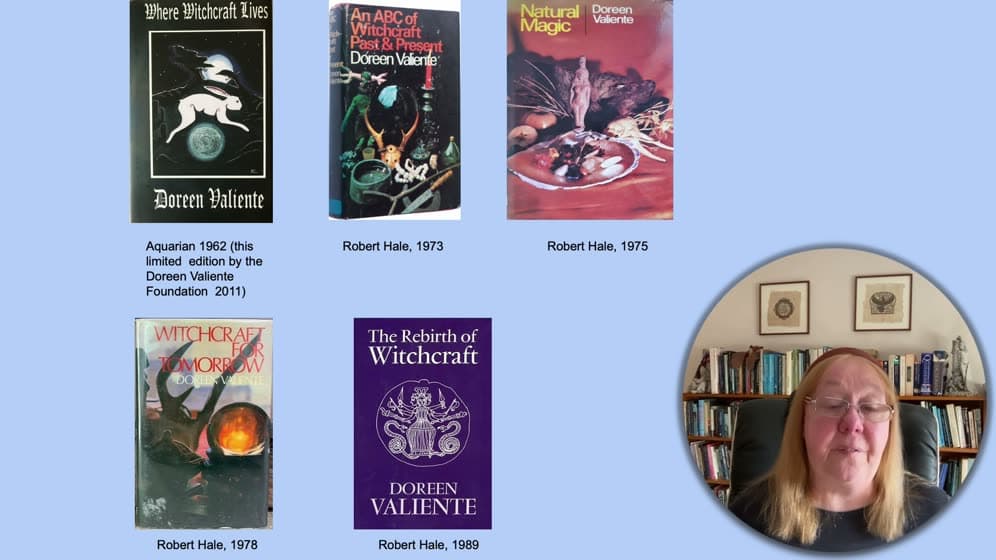
Julia traces the birth of modern Pagan witchcraft, or Wicca: its literary roots in The Golden Bough and Aradia, Margaret Murray’s flawed witch-cult theory, and the end of the Witchcraft Act after the trial of Helen Duncan. She introduces Gerald Gardner, Doreen Valiente, Sybil Leek and the figures who spread the Craft, and brings the story up to WitchTok, the census and today.

  • The books and theories that inspired modern witchcraft
  • Gerald Gardner and the founding of Wicca
  • Doreen Valiente, Sybil Leek and the Craft’s growth
  • Witchcraft today, from museums to WitchTok
Dr Julia Phillips — Entertaining Witches: From the Land of Oz to Hogwarts
Module 7

Entertaining Witches: From the Land of Oz to Hogwarts

with Dr Julia Phillips

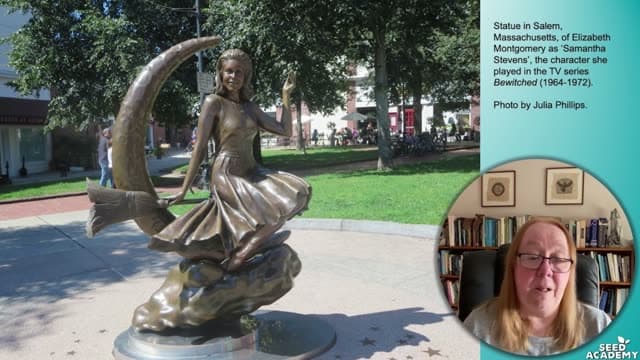
The final module follows the witch on screen, from silent films and the earliest Wizard of Oz to Disney, the 1939 green-faced Wicked Witch and the charming witches of Bell, Book and Candle. Julia moves on to television and Bewitched, the satanic panic of the 1980s and the teenage witches of the 1990s, and ends with Harry Potter — showing how screen witches tracked the rise of real-life modern witchcraft.

  • Witches in silent film and the Land of Oz
  • Hollywood’s witches, from Disney to Rosemary’s Baby
  • Bewitched, Buffy, Sabrina and the teenage witch
  • Harry Potter and the witch as a moral choice

A peek inside

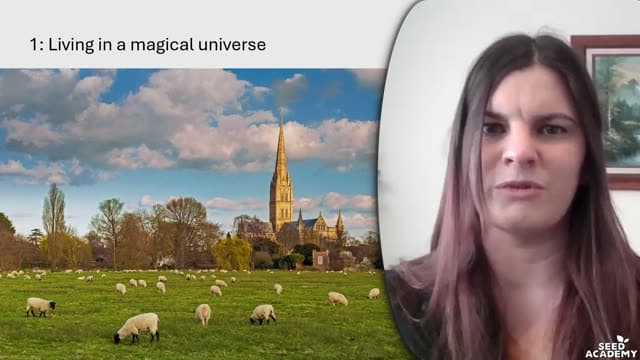
The History of Witchcraft Course — preview 1
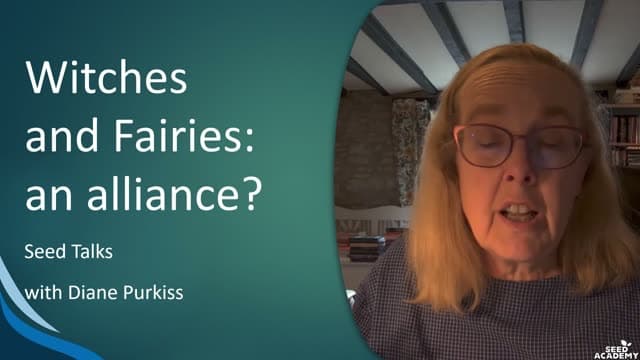
The History of Witchcraft Course — preview 2
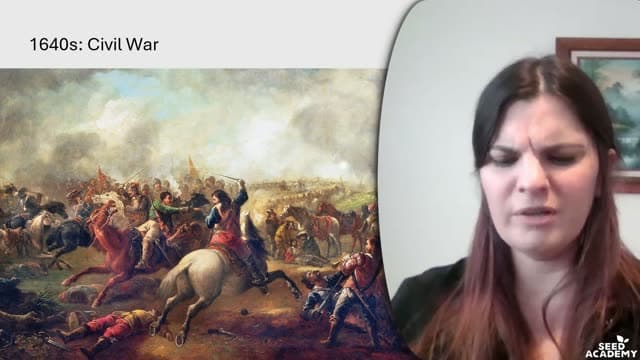
The History of Witchcraft Course — preview 3
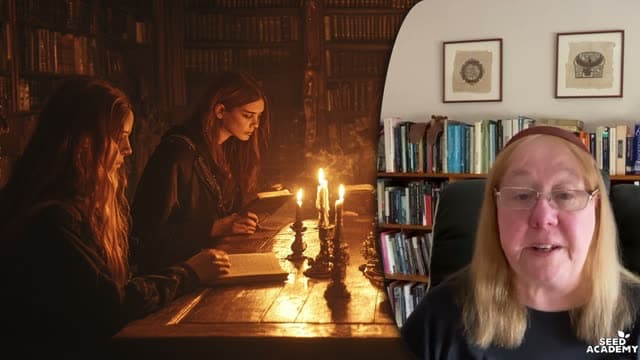
The History of Witchcraft Course — preview 4

Your speakers

Dr Jennifer Farrell

Dr Jennifer Farrell

Lecturer in Medieval History, University of Exeter

Dr Jennifer Farrell is a lecturer in medieval history at the University of Exeter. With interests in both gender and the medieval supernatural, her research and teaching focus on cultural developments and their relationship to socio-political changes in Western Europe during the high and late Middle Ages (c. 1000–c. 1500). She has published on medieval prophecy, fairies in medieval history and romance, and the relationship between literary representations of fairies, the supernatural and gender, and is currently working on a book on Geoffrey of Monmouth and the origins of the Arthurian legends.

Dr Tabitha Stanmore

Dr Tabitha Stanmore

Postdoctoral Researcher, University of Exeter

Dr Tabitha Stanmore is a postdoctoral researcher on the Leverhulme-funded Seven County Witch Hunt Project at the University of Exeter, and a specialist in medieval and early modern English magic and witchcraft. Her monograph, Love Spells and Lost Treasure: Service Magic in England from the Later Middle Ages to the Early Modern Era, was published by Cambridge University Press in 2022, and her first book for general readers, Cunning Folk: Life in the Era of Practical Magic, by the Bodley Head in 2024. She has written for TIME, The Conversation and The Telegraph, and featured on Radio 3’s Free Thinking.

Prof Diane Purkiss

Prof Diane Purkiss

Professor of English, University of Oxford

Diane Purkiss is Professor of English at the University of Oxford and a fellow of Keble College. She has published on witchcraft and fairies, and on the English Civil War — the occasion of England’s biggest witch hunt. She has appeared in more than a dozen television documentaries, and has spoken to general audiences at numerous literary festivals and many local history societies.

Dr Julia Phillips

Dr Julia Phillips

Hon Senior Research Associate, University of Bristol

Dr Julia Phillips is an Honorary Senior Research Associate and lecturer at the University of Bristol. She received her PhD for research examining how witches and witchcraft featured in the newspapers of Victorian Britain. Her work has been published in books, academic journals and popular magazines, and she is a regular presenter at conferences and events. Her main research interests are witchcraft in the 19th century and the development of modern Pagan witchcraft in the 20th and 21st centuries.

Common questions

How do I watch the course?

As soon as your payment goes through, we email you a personal link to your private course hub — every lesson, the module workbooks and full transcripts in one place. It works on any device with a browser, and there’s no account or password to set up.

How long do I have access?

You can watch and rewatch as much as you like until September 2027 — plenty of time to take the course at your own pace.

Is this live? Do I need to show up at set times?

No — the course was filmed as short lessons, mostly 5–20 minutes each, so you can watch whenever suits you. Your place in each video is remembered, so you can stop and pick up where you left off.

Do I need to know any history already?

Not at all. Each module is taught by a specialist, but pitched for curious non-experts, and the workbooks point you to further reading if you want to go deeper.

Is this the same as The Real History of Witchcraft course?

No — that’s a separate live course taught by Prof Diane Purkiss. This on-demand course brings together four historians, including Diane, for seven modules spanning the Middle Ages to today.

What if it’s not for me?

We offer a full, no-quibble refund — just ask. If the course isn’t what you hoped for, reply to your receipt and we’ll sort it, no questions asked.

Ready to start? All 7 modules, instantly — £60.