Session 1
The Neuroscience of Psychedelics
with Maria Balaet
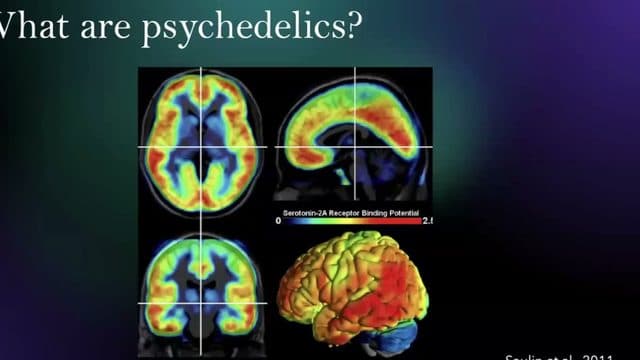
Computational neuroscientist Maria Balaet explains what psychedelics are, from the history of the word and the 5-HT2A receptor to Albert Hofmann’s first LSD trip and the 1960s shutdown of research. She sets out what psilocybin and LSD do to cognition, creativity, blood flow and the default mode network, and reviews clinical trials for alcohol use, smoking, end-of-life distress and depression. She ends with what predicts a good or difficult experience, the real risks, and the case for harm reduction.
- Why psychedelics were once called psychotomimetics, then hallucinogens
- How psychedelics mimic serotonin and bind to 2A receptors
- What psilocybin does to the default mode network and brain connectivity
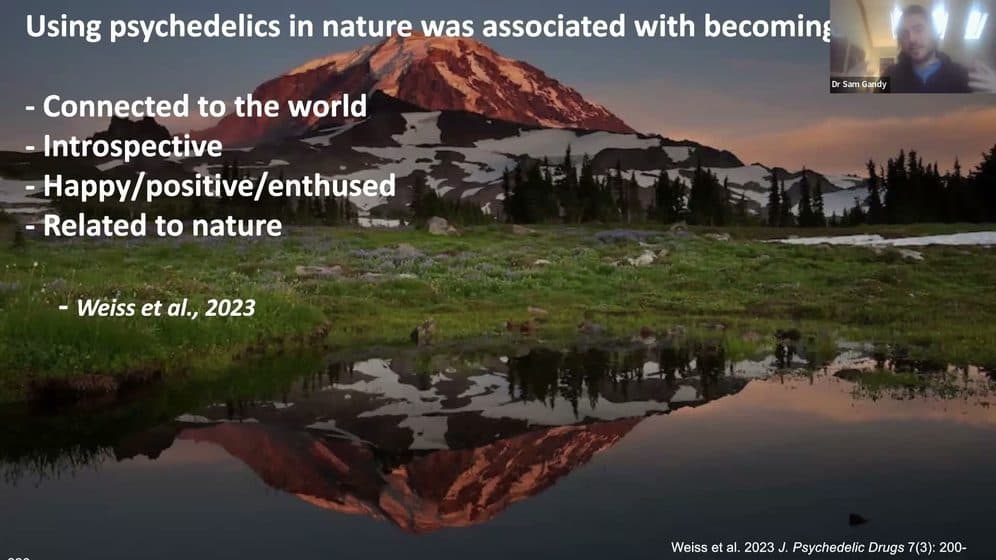
- What predicts a good trip: personality, intention, set and setting