
← All recordings



On-demand recording
The Psychology of Coercive Control
with For Baby's Sake Trust
£15
- ▶ Instant access by email after checkout.
- ♾ Watch and rewatch as much as you like, until February 2027.
- ↩ Full refund if it’s not for you — just ask.
What you’ll explore
- What coercive control is — and why it's so hard to recognise or name
- How it works psychologically to dominate, isolate and entrap
- Its impact on emotional safety, identity, parenting and early relationships
- Why it matters for anyone supporting families or responding to abuse
- Compassionate, trauma-informed ways to respond
About this talk
Explore the impact of coercive control — and supportive ways to respond — through a compassionate, trauma-informed lens.
If you were a victim of coercive control, would you know it? Coercive control is a pattern of behaviours designed to dominate, isolate and entrap another person. It often operates subtly, gradually and invisibly, making it difficult to recognise, name and challenge. While it's now recognised in law, understanding the psychology behind it is essential for anyone supporting families, working with young people, or responding to domestic abuse.
Judith Rees and Ronnie Stockton of The For Baby's Sake Trust explore how coercive control works psychologically, and its profound impact on emotional safety, identity, parenting and early relationships — with space for reflection, learning and practical use.
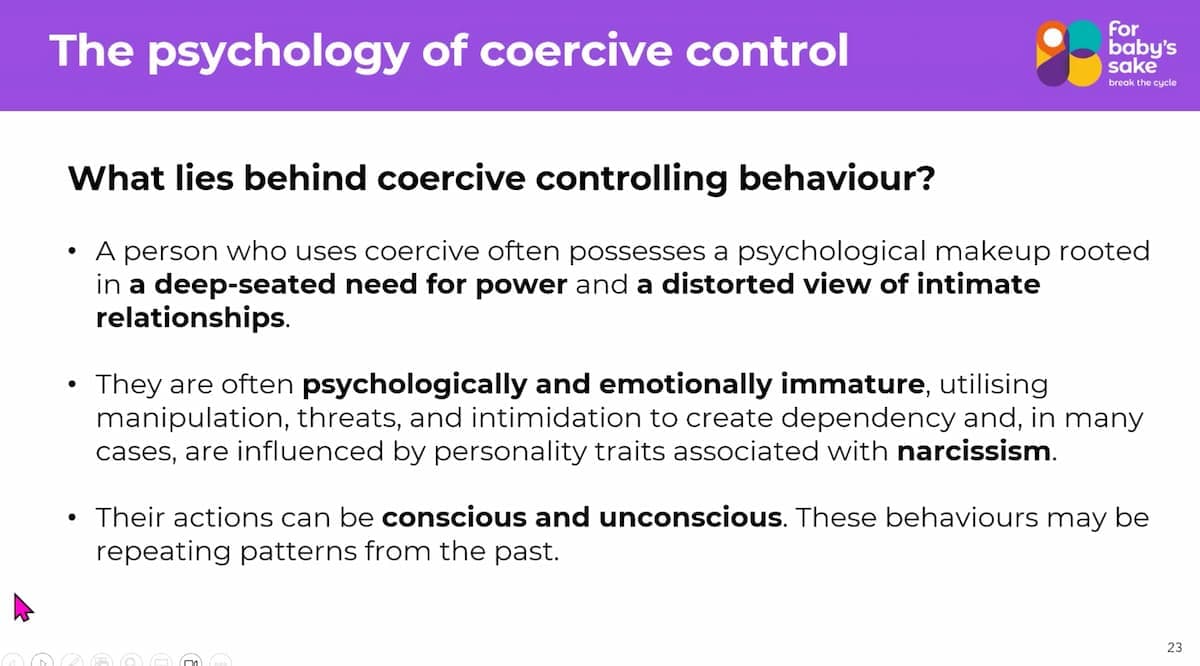
A peek inside
Your speaker: For Baby's Sake Trust
Judith Rees is Director of Operations at The For Baby's Sake Trust, joining in 2015 after 33 years in the NHS as a midwife, health visitor and safeguarding nurse; she holds an MSc in Child Protection focused on domestic abuse. The For Baby's Sake Trust is a charity dedicated to breaking the cycle of domestic abuse, working with both parents from pregnancy onwards.
Ready to watch? Instant access, watch anytime for 12 months.