
← All recordings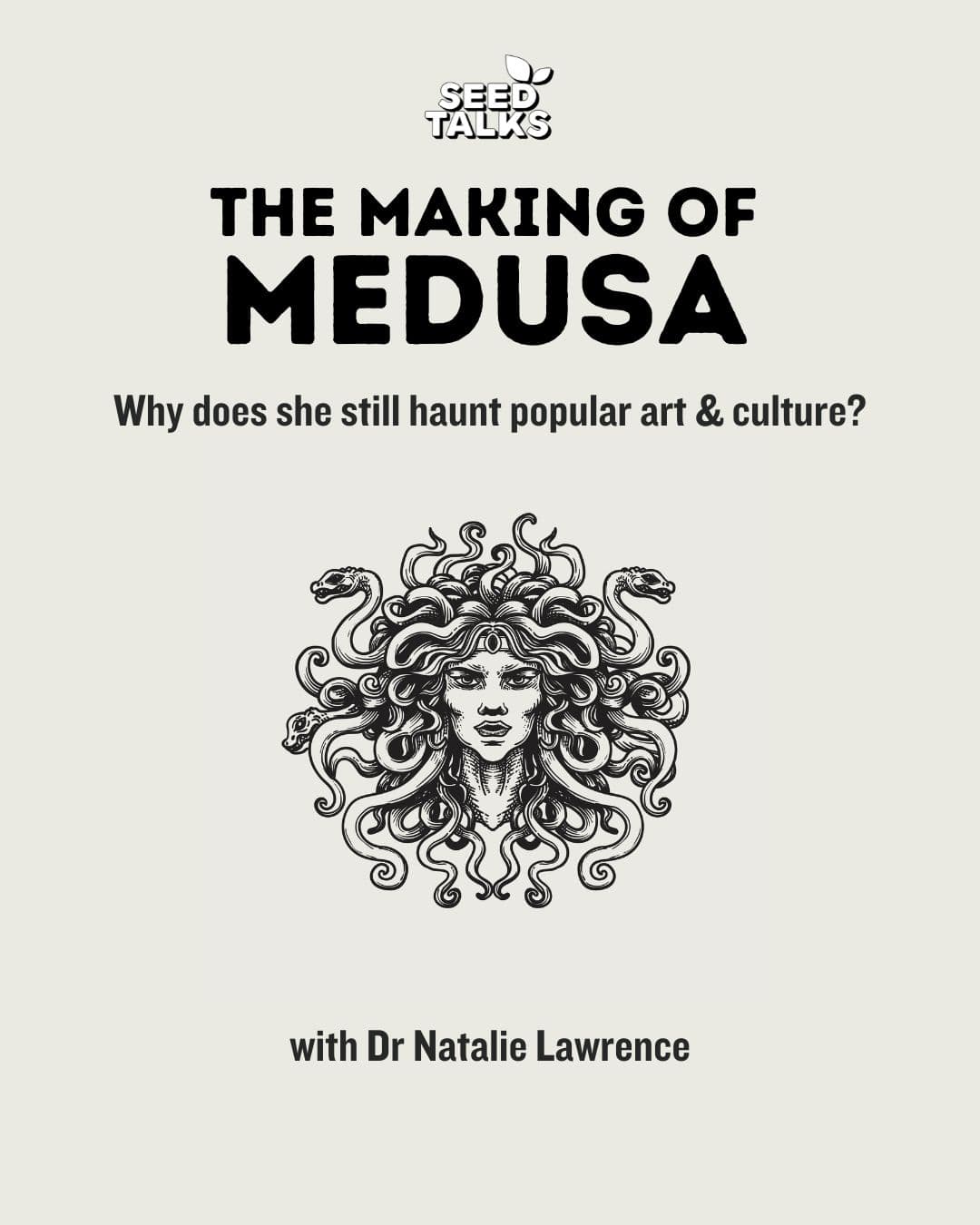
On-demand recording
The Making of Medusa
with Dr Natalie Lawrence
£13.50
- ▶ Instant access by email after checkout.
- ♾ Watch and rewatch as much as you like, until March 2027.
- ↩ Full refund if it’s not for you — just ask.
What you’ll explore
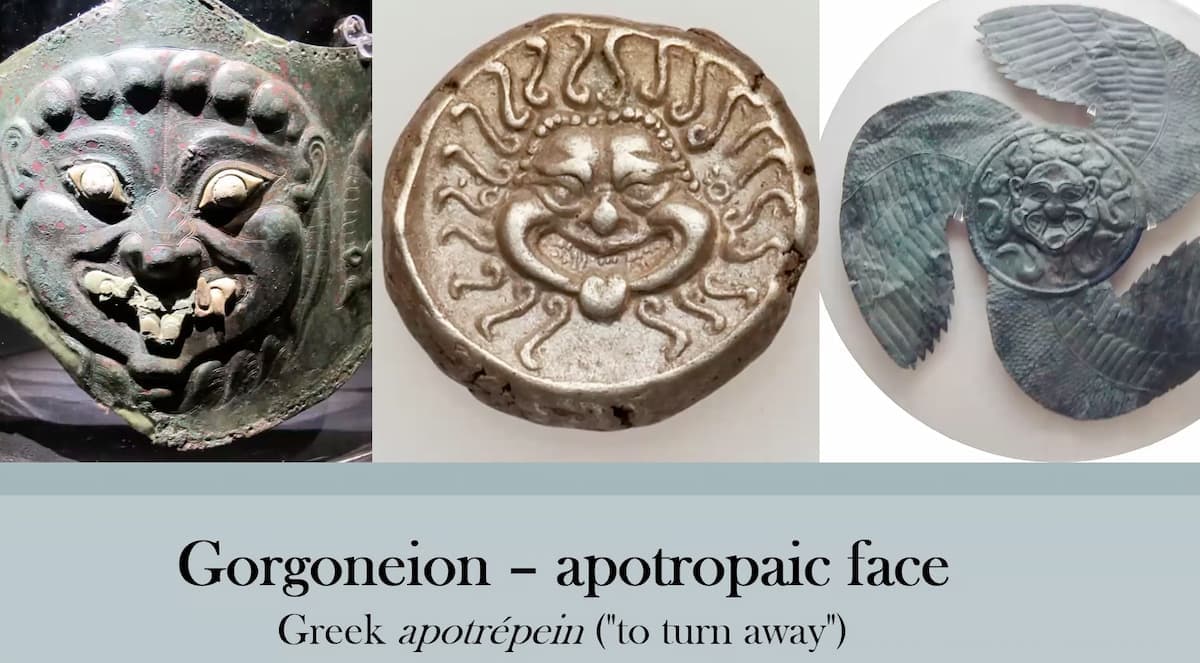
- Medusa before the myth — the protective “grinning” guardian on shields and thresholds
- Her transformation from goddess to monster to victim
- How creation, sexuality and death animate her image
- Serpent-women across mythic traditions, and why the women-and-snakes fusion endures
- Why Medusa still haunts art and culture — and what that says about us
About this talk
Uncover Medusa's lost past — from protective goddess to monster — and explore power, patriarchy, and why she endures.
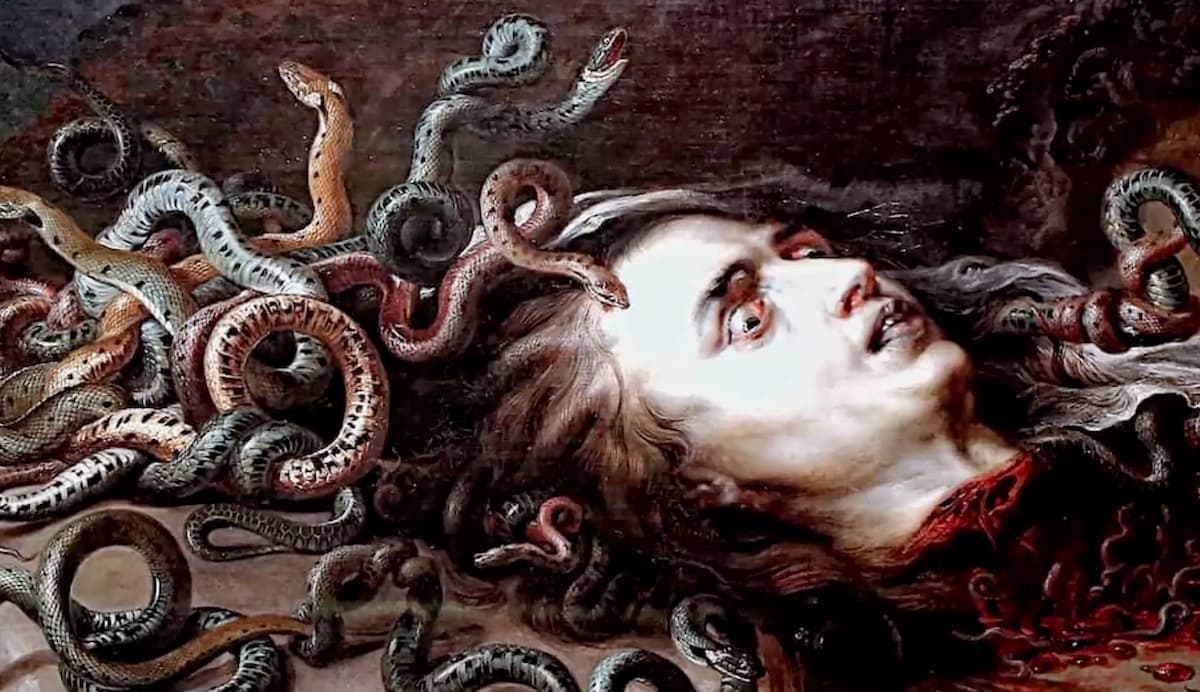
Medusa is often imagined today as a symbol of female rage or defiance: a monstrous woman turned against the male gaze. But that familiar image is only the final chapter in a far older, stranger story. Long before she was transformed by Athena or slain by Perseus, Medusa appeared as a powerful protective figure — a grinning face on pottery, shields and thresholds, believed to ward off danger.
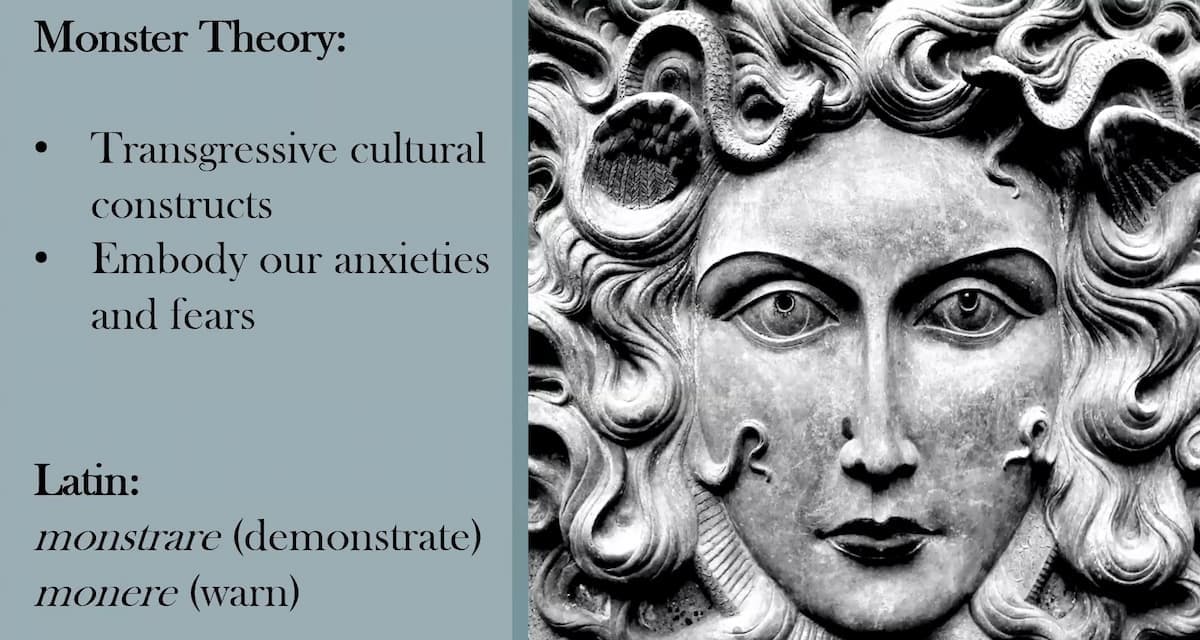
Dr Natalie Lawrence traces Medusa's transformation from guardian to monster to victim, exploring how creation, sexuality and death animate her image and why her terrifying powers were stripped away. Through comparisons with serpent-women across mythic traditions, the talk asks why the fusion of women and snakes has endured for millennia — and why Medusa still haunts art and popular culture today.
A peek inside
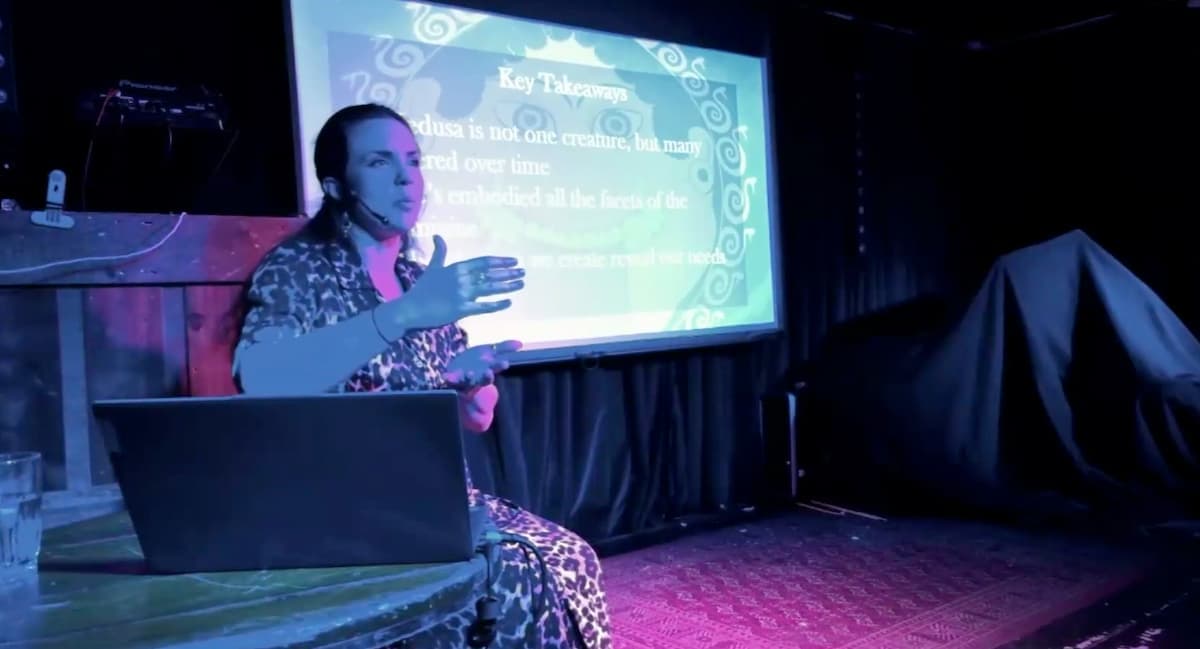
Your speaker: Dr Natalie Lawrence
Dr Natalie Lawrence is a historian of science and author of Enchanted Creatures: Our Monsters and Their Meanings (W&N, 2024), a 15,000-year history of monsters and the imagination. She holds a first in Natural Sciences and a PhD in History and Philosophy of Science from the University of Cambridge, and co-authored Planta Sapiens. She has spoken for TEDx, Cambridge Science Festival, and many radio shows and podcasts.
Ready to watch? Instant access, watch anytime for 12 months.